Description
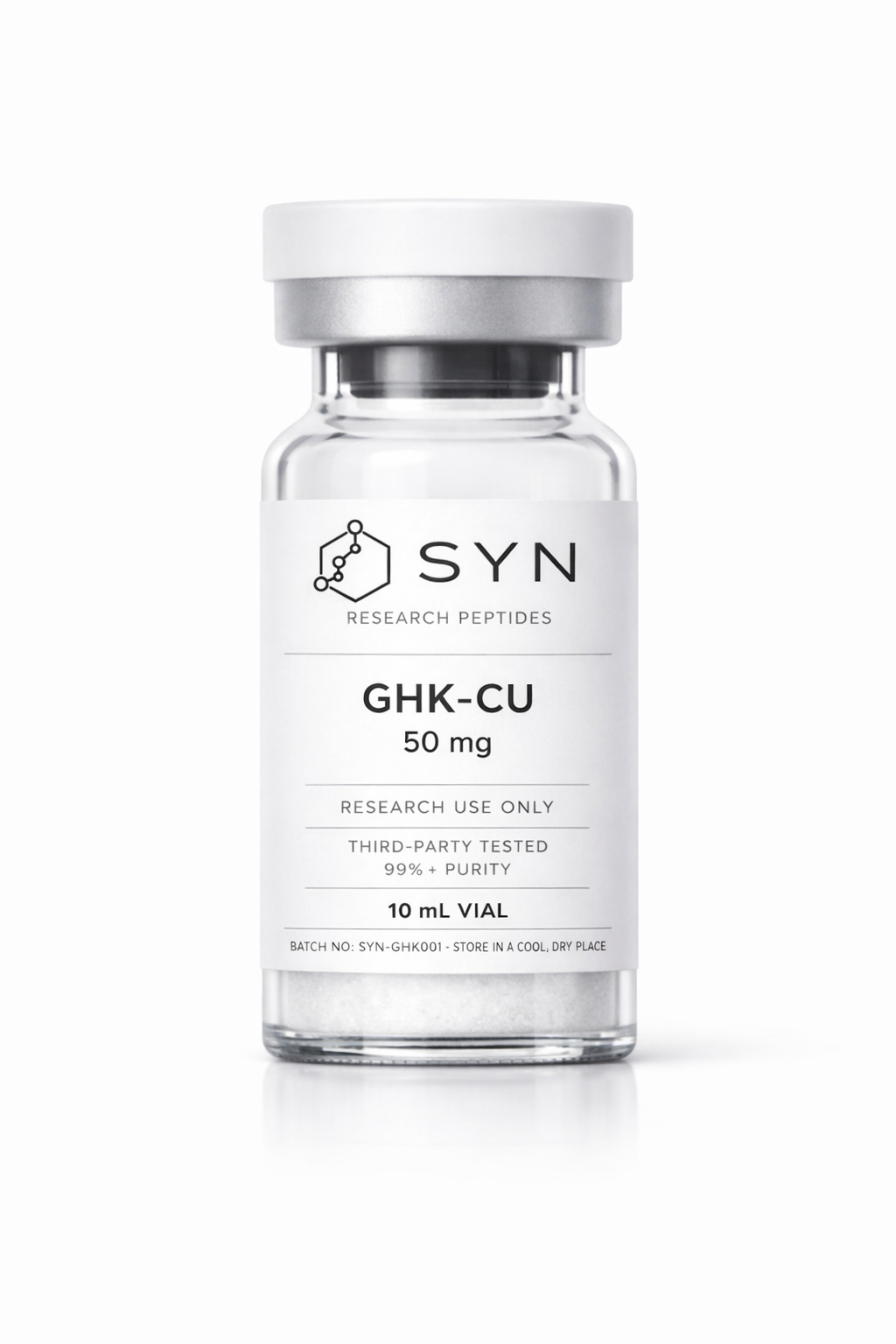
GHK-Cu (Copper Peptide) is a naturally occurring tripeptide found in human plasma, consisting of glycine, histidine, and lysine bound to a copper ion. It is widely studied in laboratory research for its role in cellular signaling, tissue remodeling, and extracellular matrix regulation.
Molecular Formula: C₁₄H₂₄CuN₆O₄
Molecular Weight: 403.92 g/mol
CAS Number: 49557-75-7
Sequence: Gly-His-Lys
Form: Lyophilized powder
Vial Size: 3mL
Amount: 50mg
Purity: ≥99% (HPLC verified)
For research use only. Not intended for human or animal consumption.
COA
Third-party Certificate of Analysis available upon request. All batches are independently tested via HPLC and mass spectrometry to verify ≥99% purity prior to release.
Contact support@synpeptidesciences.com to request batch-specific COA documentation.
Storage
All SYN Sciences peptides are manufactured using the lyophilization (freeze-drying) process, ensuring stability during shipping for up to 3–4 months at room temperature.
Once reconstituted with bacteriostatic water, store refrigerated at 2–8°C (36–46°F) and use within 30 days.
For long-term storage (months to years), store lyophilized peptide in a freezer at -20°C to -80°C, away from light and moisture.
Keep all peptides away from direct sunlight and repeated freeze-thaw cycles.
Manufacturing Process
All SYN Sciences peptides are synthesized using Solid Phase Peptide Synthesis (SPPS) — the industry gold standard for research-grade peptide production.
Process overview:
– Amino acid chains assembled on solid resin support under controlled conditions
– Cleavage and deprotection performed using pharmaceutical-grade reagents
– Purified via high-performance liquid chromatography (HPLC) to ≥99% purity
– Identity confirmed by mass spectrometry (MS)
– Screened for heavy metals and endotoxins
– Lyophilized (freeze-dried) and nitrogen-sealed in sterile vials for maximum stability
Every batch undergoes independent third-party quality verification before release.
Research
GHK-Cu is studied extensively in laboratory research settings for its role in biological signaling and cellular regulation. Research applications include:
– Extracellular matrix remodeling and collagen synthesis studies
– Angiogenesis and vascular response modeling
– Wound healing and tissue repair pathway research
– Antioxidant enzyme expression studies
– Stem cell activation and migration research
– Skin fibroblast behavior in controlled in vitro models
All references to biological activity are provided for scientific context only and do not constitute claims of therapeutic benefit. This product is not approved for human or animal use.