
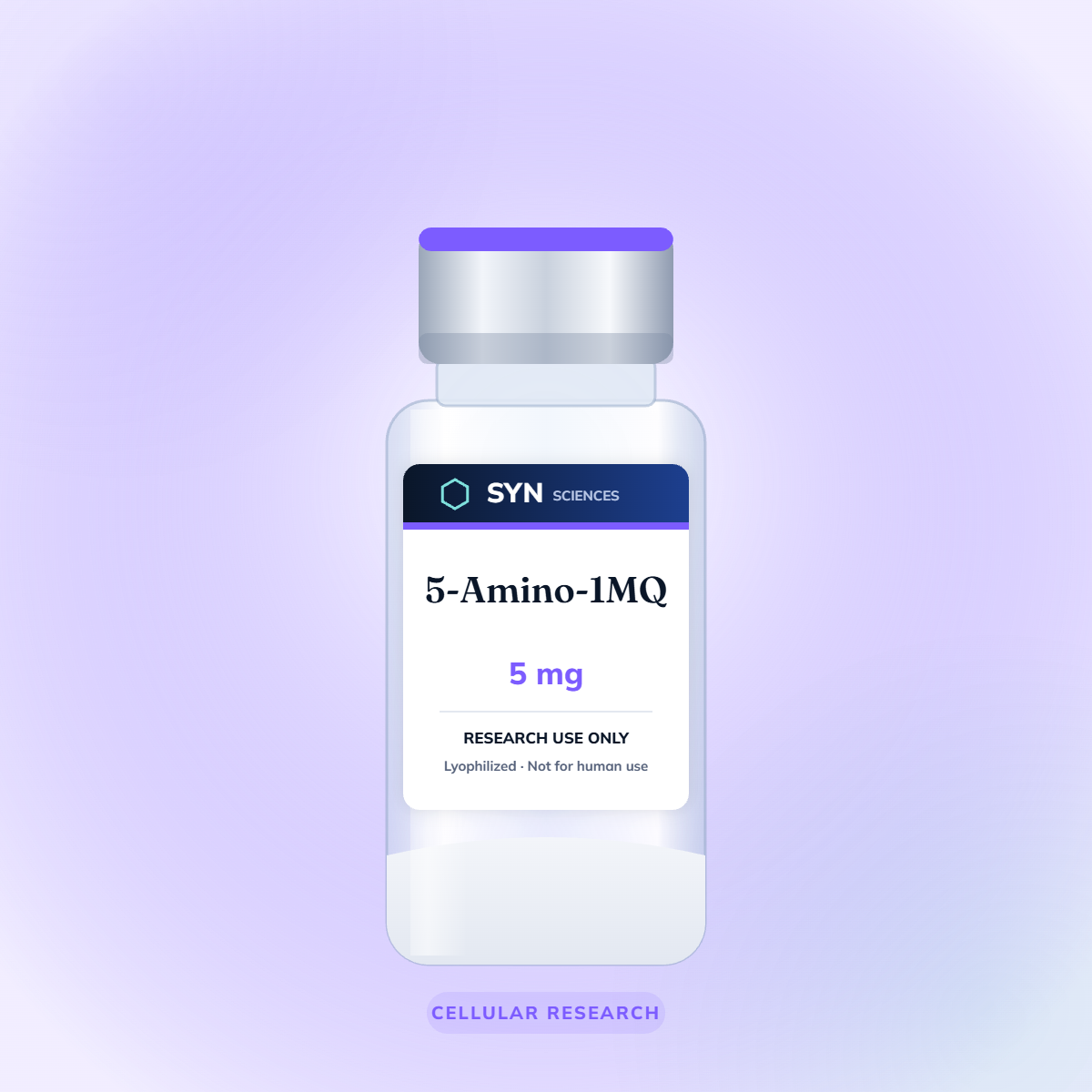
5-Amino-1MQ
Research & Literature
Peer-reviewed preclinical studies, mechanism of action, and laboratory specifications. Technical content includes plain-language clarifications for accessibility.
Compound Profile
5-Amino-1MQ (5-amino-1-methylquinolinium) is a small molecule, not a peptide. It belongs to a series of methylquinolinium compounds designed as selective, membrane-permeable inhibitors of nicotinamide N-methyltransferase (NNMT) (an enzyme that adds a methyl group to nicotinamide, a form of vitamin B3).
Interest in NNMT grew after a 2014 study found that reducing NNMT in mouse fat and liver tissue protected against diet-induced obesity (Kraus et al., 2014). Methylquinolinium NNMT inhibitors have since been studied in in-vitro (cell culture) adipocyte models and in in-vivo (animal) diet-induced obesity and aged-muscle models. 5-Amino-1MQ has not been tested in published human trials and is not approved by the FDA for any human or veterinary use.
Proposed Mechanisms of Action
The following pathways have been described in peer-reviewed preclinical literature. Each entry includes a plain-language explanation.
- 01NNMT Inhibition Methylquinolinium analogs inhibited NNMT with high selectivity, without inhibiting related SAM-dependent methyltransferases or NAD+ salvage-pathway enzymes (Neelakantan et al., 2018).Plain meaning: It blocks one specific enzyme while leaving similar enzymes alone.
- 02NAD+ and SAM Levels In cultured adipocytes, NNMT inhibitors reduced the reaction product 1-methylnicotinamide (1-MNA) and increased intracellular NAD+ and S-adenosylmethionine (SAM) (Neelakantan et al., 2018).Plain meaning: By blocking the enzyme, cells kept more of two important molecules used in energy and chemical-tagging reactions.
- 03Adipocyte Lipogenesis NNMT inhibitors suppressed lipogenesis in cultured adipocytes, and in diet-induced obese mice a potent inhibitor reduced body weight, white adipose mass, and adipocyte size without changing food intake (Neelakantan et al., 2018).Plain meaning: In fat cells and in mice on a high-fat diet, it reduced fat storage.
- 04Muscle Stem Cell Activity In aged mice, a small-molecule NNMT inhibitor activated senescent muscle stem cells and enhanced regeneration after injury (Neelakantan et al., 2019).Plain meaning: In older mice, it helped dormant muscle repair cells become active again.
- 05Target Validation Antisense knockdown of NNMT in mouse adipose tissue and liver protected against diet-induced obesity by increasing cellular energy expenditure (Kraus et al., 2014).Plain meaning: Lowering this enzyme in mice — without any drug — also protected against weight gain, supporting it as a research target.
Most 5-Amino-1MQ and methylquinolinium NNMT-inhibitor research comes from a single research group and its collaborators, and all published data are from cell culture and mouse models. No human trials of 5-Amino-1MQ have been published.
Sources & References
Peer-reviewed preclinical and pilot research
Selective and membrane-permeable small molecule inhibitors of nicotinamide N-methyltransferase reverse high fat diet-induced obesity in mice
View SourceSmall molecule nicotinamide N-methyltransferase inhibitor activates senescent muscle stem cells and improves regenerative capacity of aged skeletal muscle
View SourceNicotinamide N-methyltransferase knockdown protects against diet-induced obesity
View SourceNicotinamide N-methyltransferase inhibition mitigates obesity-related metabolic dysfunction
View SourceReduced calorie diet combined with NNMT inhibition establishes a distinct microbiome in DIO mice
View Source| Compound Name | 5-Amino-1MQ (5-amino-1-methylquinolinium) |
|---|---|
| Chemical Class | Small-molecule methylquinolinium (non-peptide) |
| Molecular Formula | C₁₀H₁₁N₂⁺ (cation; supplied as salt) |
| Molecular Weight | 159.21 g/mol (cation) |
| Target | Nicotinamide N-methyltransferase (NNMT) |
| Purity | ≥ 99% by HPLC |
| Identity | Confirmed by mass spectrometry (see batch COA) |
| Form | Lyophilized solid |
| Vial Contents | 5 mg per vial |
| Solubility | Water, DMSO |
| Storage | −20°C, desiccated, protected from light |
| Intended Use | In-vitro laboratory research and scientific study only |
| Regulatory Status | Not FDA approved for human or veterinary use |
Certificate of Analysis
SYN Sciences uses independent third-party analytical testing (Janoshik Analytical) to verify the identity and purity of 5-Amino-1MQ. Certificates of Analysis report HPLC purity and mass spectrometry identity results and are posted to the COA Library as they become available for each batch.
Batch Number: Listed on vial label and batch COA
View COA LibraryNeed the COA for your specific batch? Email support@synpeptidesciences.com with your order number and we will send the analytical report.